Thinking about a new build in Daybreak and wondering which choices will still feel smart in five years? You have plenty of options, and it can be hard to know what matters most for daily living, comfort, and resale. This guide breaks down the design features that stand out in Daybreak right now, plus how community rules and Utah’s climate shape your choices. You’ll leave with clear priorities, practical checklists, and tips to talk through with your builder. Let’s dive in.
Daybreak’s plan shapes design
Daybreak is a master-planned community with mixed housing, walkable streets, and easy access to parks, lakes, and trails. Stations on the UTA TRAX Red Line support transit-oriented living, which encourages compact, connected neighborhoods. The area’s semi-arid climate brings hot, dry summers and cold, snowy winters, so insulation, snow loads, and efficient HVAC are important. Community design standards and HOA review guide many exterior choices, including materials, colors, garage placement, fencing, and landscaping.
Floorplans that fit Daybreak life
Open-concept layouts remain popular, especially when the kitchen, dining, and family rooms flow together for easy entertaining. You’ll see flexible rooms marketed as flex, bonus, or den that can shift between a home office, gym, or playroom. Main-floor primary suites and first-floor living are in demand for convenience and long-term comfort. Multi-generational suites and finished basements with private entries or a wet bar can support extended family needs.
Practical circulation and storage
- Mudrooms with built-in lockers near the garage
- Laundry adjacency to the primary suite or bedrooms
- Walk-in pantries and extra storage under stairs
Finishes and features buyers choose
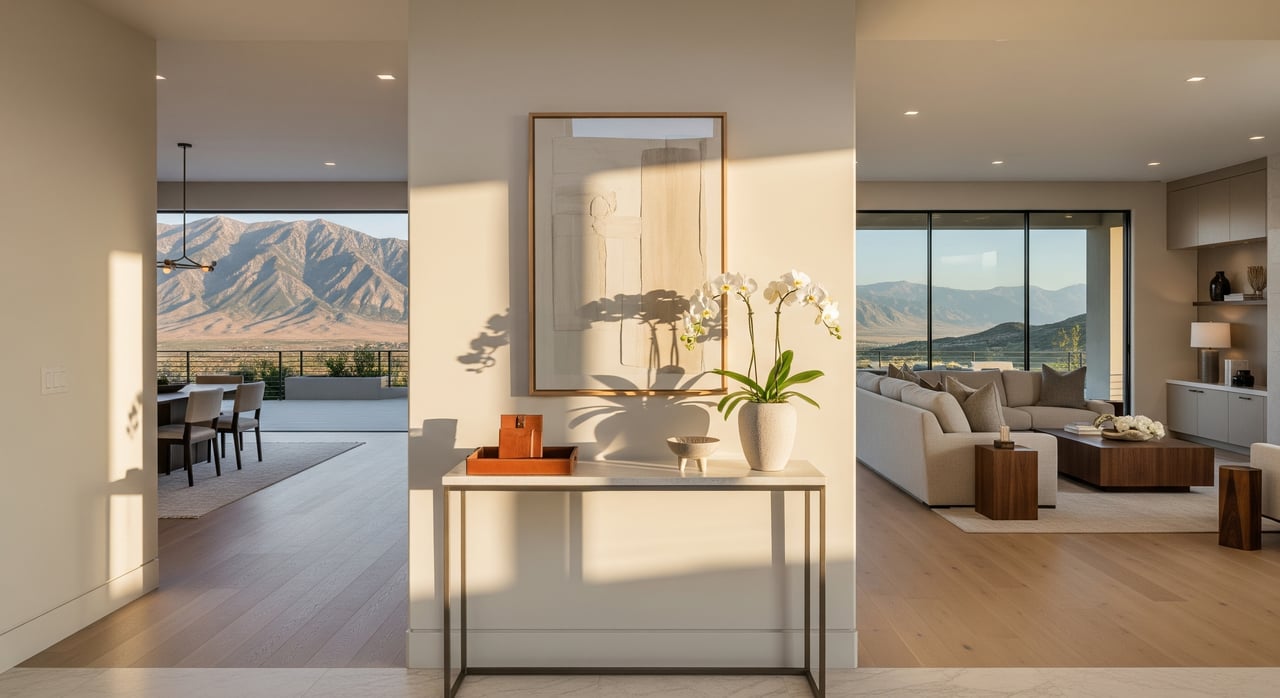
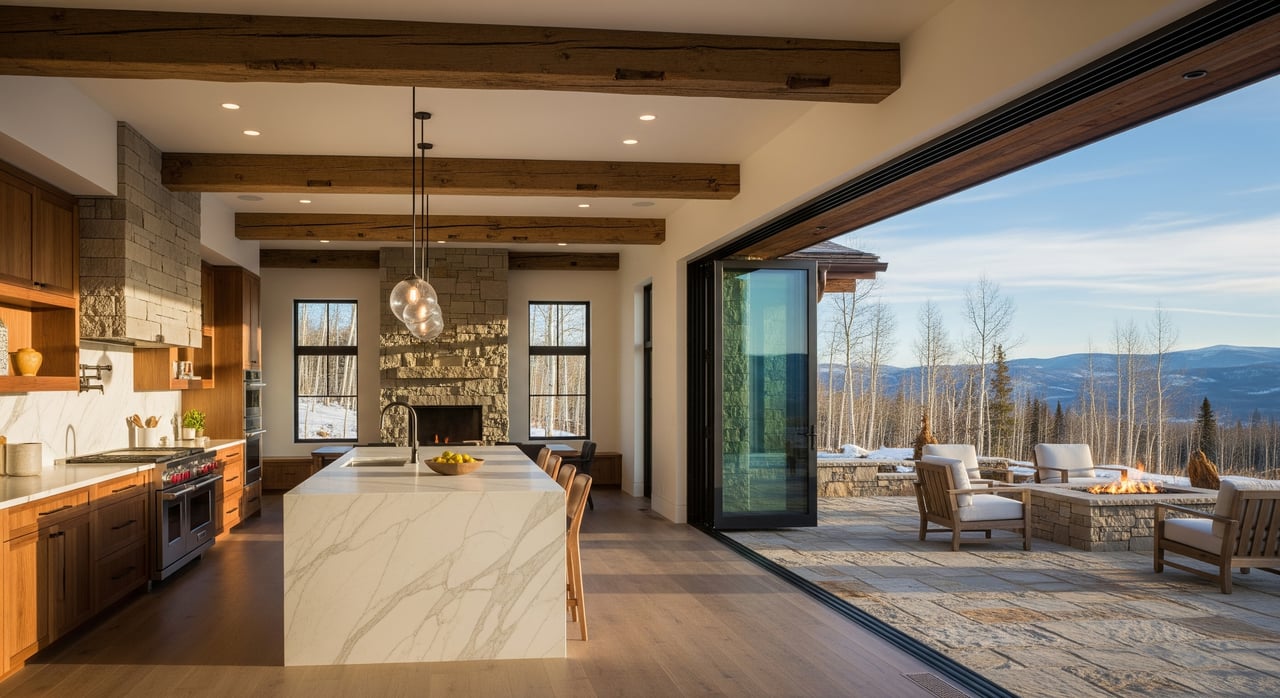
Warm neutral palettes, natural wood tones, and simple lines are common, with modern and farmhouse influences both in play. For performance and low upkeep, quartz counters, engineered hardwood or high-quality LVP on main floors, and porcelain tile in wet areas work well. Matte black and brushed nickel are frequent hardware choices, and mixed metals show up in lighting and plumbing. In the kitchen, oversized islands, full-height cabinetry, and walk-in pantries are frequent highlights, along with gas or induction cooktops.
Indoor–outdoor living that works
Covered patios and outdoor rooms extend living space and make it easier to enjoy lake breezes and trail access. If you are near a trail or open space, orient patios and main living areas to balance views with privacy. Water-wise landscaping is a smart default in Utah’s climate, with efficient irrigation like drip systems and smart controllers. Expect site design that supports stormwater management, including permeable surfaces where appropriate.
Energy-smart and future-ready systems
You’ll see a focus on high-performance building envelopes, stronger insulation, and efficient HVAC for comfort and lower utility bills. Cold-climate heat pumps are gaining traction, and heat-pump water heaters are becoming more common as options. Many homes are sold solar-ready, with roof and electrical considerations that make future panels easier, and some builders offer rooftop solar packages. Smart thermostats and basic energy monitoring are often included or offered as part of a starter smart-home bundle.
Connected home technology
Prewired structured wiring and whole-home networking options help you get reliable Wi‑Fi coverage. Smart doorbells and security prewire are typical, and some plans include hub locations for clean installations. Garages are increasingly EV-ready with dedicated 240V circuits or easy pathways to add them later. For work-from-home needs, look for data ports in flex rooms and quiet placement away from the busiest parts of the house.
Accessible design for the long term
Zero-step entries, wider doors, and simple, barrier-aware circulation support easy living at any age. First-floor primary suites and curbless showers are practical today and helpful for long-term accessibility. Small details like lever handles and offset hinges can make a big difference without changing the look of your home.
Lot selection tips in Daybreak
- Orientation: South-facing windows can boost natural light and passive solar warmth; consider shade and window placement to manage summer heat.
- Views and privacy: Lots near lakes and trails can feel open and connected; plan fence lines, window placement, and patio screening early.
- Proximity: Think about distance to parks, pools, and TRAX stations if you want a walkable routine.
- Garage placement: Alley-loaded or side-entry garages can improve streetscape and curb appeal; front-facing is still common depending on product and lot.
- HOA rules: Review guidelines for exterior colors, fencing, and landscaping early to avoid surprises.
Cost vs. value: smart upgrades now
Prioritize the upgrades that improve comfort and long-term costs first. Many cosmetic choices can wait.
Choose these early
- Insulation, air sealing, and window performance
- High-efficiency HVAC or cold-climate heat pump
- Solar-ready electrical and roof planning
- EV-ready 240V circuit in the garage
- Durable main-floor flooring and stair treads
- Smart thermostat and whole-home networking
- Storage solutions like walk-in pantry shelving and garage organization
Save these for later
- Decorative lighting and accent fixtures
- Cabinet hardware and minor finish swaps
- Feature walls, paint accents, and most wallpaper
- Some appliance upgrades if rough-ins match future plans
Questions to ask your builder
- Which energy-efficiency features are standard versus upgrade, and what is the expected utility impact?
- Is the home solar-ready, and what is required to add rooftop solar later?
- Will the garage be EV-ready with a dedicated 240V circuit or conduit for future installation?
- What are the options for flexible spaces and how can they be prewired for work-from-home?
- Which exterior materials, colors, fencing, and landscaping are allowed by the HOA?
- How are patios, overhangs, or shading designed to handle summer heat and winter snow loads?
Timeline and process expectations
Build timelines vary based on product type and selections. Inventory or spec homes can be the fastest path, while semi-custom builds often take several months from contract to completion. Customizations, permits, and site conditions can extend timelines, so confirm current lead times with your builder. Ask how HOA design review and city inspections fit into the schedule.
How we help you buy new in Daybreak
You deserve a smooth, informed new-build experience that balances style, comfort, and value. Our team helps you compare plans, evaluate lots, and choose upgrades that fit your goals and the Daybreak lifestyle. We coordinate with builders, review HOA guidelines with you, and track milestones so you can focus on what matters. When you are ready to explore options, connect with Utah’s Finest Realtors for a consult that puts your priorities first.
FAQs
How do Daybreak new builds differ from resale homes?
- New builds typically offer modern floorplans, stronger energy-efficiency packages, and some customization, while resales may offer mature landscaping and established streetscapes.
Which upgrades cut monthly costs in Daybreak new homes?
- Insulation, air sealing, high-efficiency HVAC or cold-climate heat pumps, quality windows, and smart thermostats generally deliver the best long-term savings.
Are solar panels and EV chargers common in new Daybreak homes?
- Many new homes are sold solar-ready, and EV-ready garage circuits are increasingly common as standard or easy upgrades; confirm availability with your builder.
How do HOA rules affect exterior design in Daybreak?
- Architectural standards guide exterior colors, materials, fences, and landscaping, so reviewing HOA documents early helps you set realistic expectations.
How important is lot orientation near lakes, trails, or TRAX?
- Orientation influences natural light, privacy, passive solar gain, and outdoor living, and lots near open space often command design choices that optimize views.
How long does a new build usually take in Daybreak?
- Timelines vary by product and selections; spec homes can be quick, while semi-custom and custom builds take longer based on options, permits, and inspections.